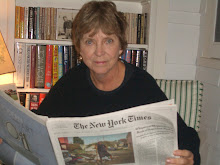
Copyeditors don't get the credit they deserve. No bylines. No chances to interview famous people. No press invitation to fancy openings. But it's copyeditors who "can lift the quality of the publication in ways that no other journalist can match," says James Glen Stovall, a University of Tennessee journalism professor known online as JPROF. What I just did is called attribution, giving credit to someone for his work instead of just lifting it without acknowledgement.
It was through his website JProf that I found a study guide I think might help you polish your copyediting skills -- not to mention your language! Click HERE to begin brushing up.
Monday, November 10, 2008

Wednesday, November 5, 2008
Readwritethink
Three little words smushed together, but that's the first hit I found when I goggled for "quotations in features stories." It led to a website which explained that feature stories -- and that's what ZU Mirror is all about -- "can range from people to places, technology to trends, and local color to contemporary culture; but at the heart of all feature stories is human interest." So what's in a "feature story"?
*Feature stories are descriptive and full of detail.
*Feature stories generally have a strong narrative line (translation: tell a story).
*Feature stories have a strong lead that grabs readers and makes them want to read on.
*Feature stories include quotations from the person(s) involved.
*Feature stories combine facts and opinion with a focus on the human interest side of the story. While they can report the news, the news content is not of primary importance.
*Feature stories both educate and entertain. They can include colorful detail as well as humor.
*Feature stories contain the voice of the writer (that means your personality can come across).
*Feature stories can be organized in a variety of ways(Ex: as it happened or as a narrative --once upon a time).
*Feature stories often put the "meat" on the "skeletal bones" of a news story.
--- Courtesy Readwritethink.org.
What I just did was "attribution," giving credit to the source of the information.
So how much human interest is in the story you're working on?
*Feature stories are descriptive and full of detail.
*Feature stories generally have a strong narrative line (translation: tell a story).
*Feature stories have a strong lead that grabs readers and makes them want to read on.
*Feature stories include quotations from the person(s) involved.
*Feature stories combine facts and opinion with a focus on the human interest side of the story. While they can report the news, the news content is not of primary importance.
*Feature stories both educate and entertain. They can include colorful detail as well as humor.
*Feature stories contain the voice of the writer (that means your personality can come across).
*Feature stories can be organized in a variety of ways(Ex: as it happened or as a narrative --once upon a time).
*Feature stories often put the "meat" on the "skeletal bones" of a news story.
--- Courtesy Readwritethink.org.
What I just did was "attribution," giving credit to the source of the information.
So how much human interest is in the story you're working on?
Tuesday, November 4, 2008
Get-The-Name-Right Tip
When interviewing anyone OTHER THAN a fellow student, ask for a business card. That will give you not only the correct spelling of the person's name but also correct title and correct name of organization. Keep a file of all the business cards you collect after noting the date received and any other reminders you might need about the source. You never know when such information might come in handy.
Monday, November 3, 2008
What's the story?
Whether you are writing, editing, illustrating or shooting photographs for an article, the first question you have to ask is: What's the story? If you don't know, how can the reader? If you are writing a news story in the traditional inverted pyramid style -- who, what, where, why, when and sometimes how -- your organization is chosen for you. Answer those questions in 35 words or less and you've got at least a news brief. But you don't have a news feature or a magazine article.
A bit of print trivia for you: the inverted pyramid came about because of technology, not writing style. In the 1860s journalists covering the American civil war from the battle field filed their story by telegraph, which transported messages by electrical impulses over wires. Reporters wanted to get all the essential information out fast just in case the line went dead.
Magazine writing eases into the story, hooking the reader with anecdotes, description, quotes, questions or turn of phrase, providing pleasure and entertainment as well as information. But you still must know where you are going with your tale. Ask yourself why is this story being written? Collect and organize your information to that end.
But as I look over too many of the stories this fall, I get the feeling that they were written with a paintball gun -- splatters all over the place and no where near the assigned target.
You would have had better aim if you had talked out your story with the writing coach first. That would be me.
A bit of print trivia for you: the inverted pyramid came about because of technology, not writing style. In the 1860s journalists covering the American civil war from the battle field filed their story by telegraph, which transported messages by electrical impulses over wires. Reporters wanted to get all the essential information out fast just in case the line went dead.
Magazine writing eases into the story, hooking the reader with anecdotes, description, quotes, questions or turn of phrase, providing pleasure and entertainment as well as information. But you still must know where you are going with your tale. Ask yourself why is this story being written? Collect and organize your information to that end.
But as I look over too many of the stories this fall, I get the feeling that they were written with a paintball gun -- splatters all over the place and no where near the assigned target.
You would have had better aim if you had talked out your story with the writing coach first. That would be me.
Wednesday, October 29, 2008
Quick & Easy Rule for Punctuation in Quotes
Simple as this:
In American English, punctuation points like commas and periods always go inside the quotation marks.
Example:
She said,"I want to go home."
So where does a question mark go? Depends.
Example one:
Did you see the movie "What's New, Pussycat?"
Question mark is INSIDE the quote because it is part of the title of the play.
Example two:
Are you reading Shakespeare's "Hamlet"?
Question mark is OUTSIDE because you're asking a question about a play that DOESN'T have a question in its title.
Confusing?
Who said English is logical? You could have studied French! Or Spanish where a question mark goes at both ends of the sentence but upside down at the beginning.
In American English, punctuation points like commas and periods always go inside the quotation marks.
Example:
She said,"I want to go home."
So where does a question mark go? Depends.
Example one:
Did you see the movie "What's New, Pussycat?"
Question mark is INSIDE the quote because it is part of the title of the play.
Example two:
Are you reading Shakespeare's "Hamlet"?
Question mark is OUTSIDE because you're asking a question about a play that DOESN'T have a question in its title.
Confusing?
Who said English is logical? You could have studied French! Or Spanish where a question mark goes at both ends of the sentence but upside down at the beginning.
Tuesday, October 28, 2008
Mirror, Mirror on the Wall....
Let's make the ZU Mirror the most beautiful of all. This blog has been created for the students in COM 328 and 329 (Publication Design and Production I and II) to increase our in-house communication and encourage participation of all students. Here you will find a potpourri of postings including reporting, writing and editing tips; assignment opportunities on the Mirror; announcement of off-campus events related to the course; and links to websites and articles that may help you improve your performance.
Check in daily to see what's new. Sign on as a follower of this blog and add your comments to postings. Comments count as class participation.
Check in daily to see what's new. Sign on as a follower of this blog and add your comments to postings. Comments count as class participation.
Subscribe to:
Comments (Atom)